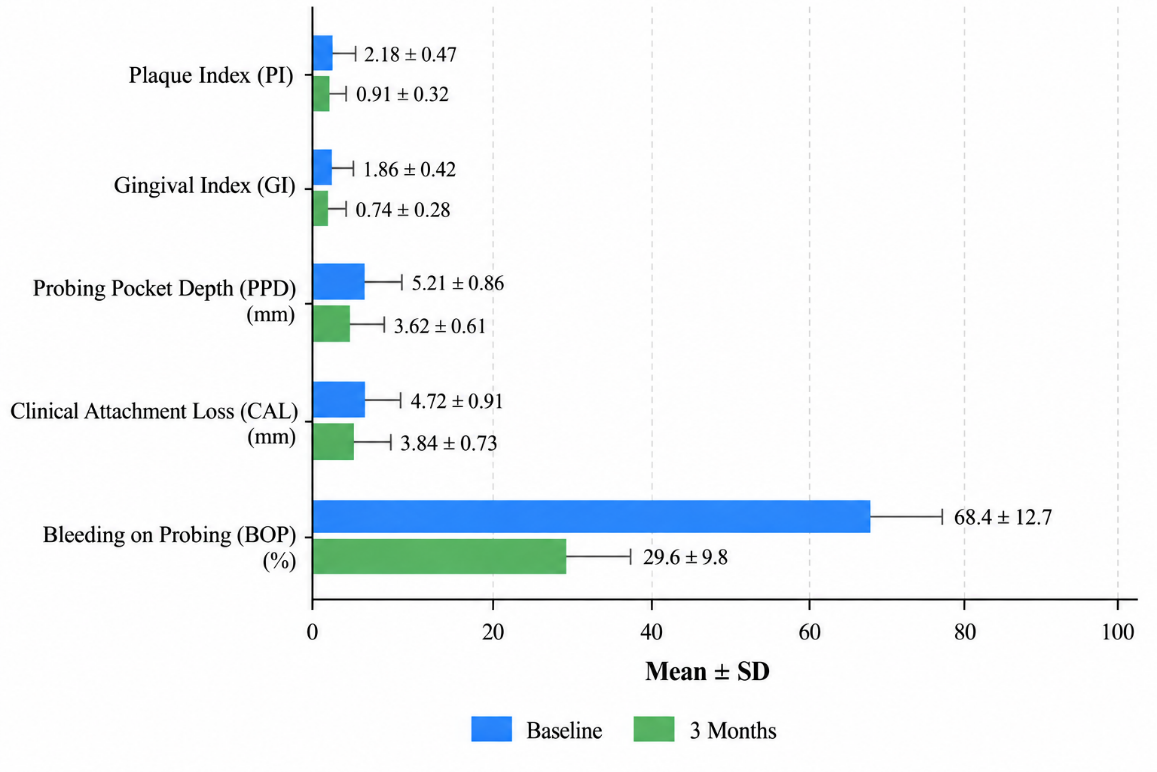
Figure 1: Changes in periodontal clinical parameters at baseline and 3 months following comprehensive periodontal treatment.
Abdellah Ahmed Mostafa1 Muhammad Khaliq2*
1Dental Assitant/Technician, College of Dentistry, King Khalid University Hospital, Abha, KSA | 2Department of Basic Medical Sciences, University of Health Sciences, Lahore, Pakistan
*Correspondence: Muhammad Khaliq (khaliqmpathologistmed@gmail.com)
Received: 22 August, 2026 Revised: 17 September, 2026 Accepted: 22 September, 2026 Published: 30 September, 2026
Background: Periodontal disease represents a chronic inflammatory state with negative effects on oral function, comfort, psychological health and social interaction. This study aimed to evaluate changes in oral health-related quality of life (OHRQoL) before and after comprehensive periodontal treatment and determine the association between periodontal improvement and OHRQoL. Methods: This prospective clinical study included 120 adults with periodontitis. Demographic characteristics and periodontal parameters were obtained. Oral Health Impact Profile (OHIP-14) was used to assess the OHRQoL. Full periodontal treatment was provided to all participants, and outcomes were reevaluated at 3 months. SPSS version 26 was used for statistical analysis. Correlations and paired comparisons were made, and significance was established at p < 0.05. Results: A marked improvement occurred in all the periodontal parameters assessed following treatment. Mean PI decreased from 2.18 ± 0.47 at baseline to 0.91 ± 0.32 at 3 months, while GI decreased from 1.86 ± 0.42 to 0.74 ± 0.28 (both p<0.001). Mean PPD decreased from 5.21 ± 0.86 mm to 3.62 ± 0.61 mm, and CAL decreased from 4.72 ± 0.91 mm to 3.84 ± 0.73 mm (p<0.001). BOP also was significantly reduced. OHRQoL (total OHIP-14) score improved significantly from 28.6 ± 6.4 to 17.4 ± 4.8 (p<0.001). Improvements were noted across all 7 domains of the OHIP-14. Periodontal improvement was significantly and positively correlated with improvements in OHIP-14 scores (r=0.64, p<0.001). Conclusion: Comprehensive periodontal treatment was associated with improvements in periodontal clinical parameters and OHRQoL at 3 months, supporting patient-reported outcomes in periodontal treatment evaluation.
Keywords: Dental Plaque; Oral Health; Periodontal Diseases; Periodontal Pocket; Periodontitis; Quality of Life; Treatment Outcome.
Periodontal disease is a frequently encountered chronic oral condition is a significant contributor to tooth loss, difficulty chewing, pain and disability for adults 1. While the initial signs of periodontal disease are inflammation and breakdown of the tissues that support the teeth, the effects of periodontal disease are not limited to clinical measures, and can significantly affect patients' daily lives 2. Discomfort, pain, bleeding, loss of function, emotional discomfort, and concerns regarding appearance can adversely affect social life and overall well-being 3. Instead of depending solely on traditional periodontal evaluations, treatment outcomes should take into account patient-reported outcomes regarding the impact of oral health on quality of life 4.
An essential patient-centered outcome that assesses the impact of oral health issues on social, psychological, and physical functioning is oral health-related quality of life (OHRQoL) 5. The Oral Health Impact Profile-14 (OHIP-14) is a widely used and validated instrument such as functional limitations, physical pain, psychological discomfort, physical and psychological impairment, social disability, and handicap, is the Oral Health Impact Profile-14 (OHIP-14) 6. A higher OHIP-14 score indicates a greater negative impact of oral health conditions on an individual's daily life 7. Comprehensive periodontal therapy, comprising professional plaque control, scaling and root planning, oral hygiene instruction, and supportive periodontal care, aims to eliminate periodontal inflammation, reduce pocket depth, prevent excessive bleeding, and maintain periodontal attachment 8. Improvements in these clinical outcomes can translate into clinically relevant improvements in patients' oral health and quality of life 9. The correlation between objective periodontal improvement and patient-reported outcomes should be further evaluated clinically.
The purpose of this prospective clinical study was to assess OHRQoL changes following comprehensive periodontal treatment. The study also aimed to assess changes in clinical periodontal parameters, and to determine the correlation between the improvement in OHIP-14 scores and the improvement in periodontal clinical parameters.
A prospective clinical study (January 2022 to June 2022, n=120) was conducted in the authors’ affiliated tertiary dental care centers in Lahore to evaluate changes in periodontal clinical parameters and oral health-related quality of life associated with comprehensive periodontal treatment (CPT). The participants were assessed at the beginning and then followed for 03 months after active periodontal treatment. The study was reported in accordance with the Transparent Reporting of Evaluations with Nonrandomized Designs (TREND) guidelines (#MS/074/22).
The study included adult patients with a diagnosis of chronic periodontitis presenting for periodontal assessment and treatment. The patients who came to periodontal outpatient department during the study period were recruited consecutively. The sample size was estimated using PASS (Power Analysis and Sample Size Software), Version 26.0.4 (Released 2026; NCSS, LLC, Kaysville, UT, USA) 10. Assuming a standardized paired effect size of 0.30, a two-sided significance level (α) of 0.05, and 90% statistical power, the required sample size was determined using the paired-mean difference framework, where n represents the required sample size, Z(1-α/2) is the standard normal deviate corresponding to the two-sided significance level, Z(1-β) is the standard normal deviate corresponding to the desired power, and dz is the standardized effect size for the paired differences. The minimum required sample size was approximately 119 participants. Therefore, 120 participants were included in the study.
Participants were considered eligible if they met the finalized criteria (Aged ≥18 years, had a clinical diagnosis of periodontitis, had at least 20 natural teeth, had clinical evidence of periodontal inflammation and periodontal attachment loss, were willing to undergo comprehensive periodontal treatment, were able to understand and complete the OHIP-14 questionnaire and provided written informed consent. Patients were excluded based on periodontal therapy received in the last 6 months, active orthodontic treatment, had systemic conditions that could substantially influence periodontal status or healing, were receiving medications known to significantly affect periodontal tissues, were pregnant or lactating, had acute oral infections requiring emergency treatment, had extensive untreated dental conditions that could independently substantially influence OHRQoL, and lack of follow-up visit. The Institutional Ethics Committee examined and approved the study protocol before it began. Every participant received information on the study's goals and methods, its possible advantages, and their freedom to discontinue participation at any moment without affecting their treatment. Written informed consent was obtained from all participants before enrollment.
Prior to participation, each subject provided written informed permission. Study identifiers were used to evaluate data once participant information was anonymized. Demographic data such as age and sex were obtained at baseline. A thorough periodontal examination was then conducted by a calibrated dental examiner.
The following parameters of the periodontium were evaluated:
Plaque Index (PI): Plaque accumulation was evaluated using a standardized plaque scoring system.
Gingival Index (GI): Gingival inflammation was assessed based on changes in gingival color, edema, and bleeding response.
Probing Pocket Depth (PPD): Measured in millimeters as the distance from the gingival margin to the base of the periodontal pocket.
Clinical Attachment Loss (CAL): Determined as the distance from the cemento-enamel junction to the base of the periodontal pocket.
Bleeding on Probing (BOP): Bleeding response following standardized periodontal probing was recorded and expressed as a percentage of examined sites.
Periodontal measurements were obtained at six sites per tooth, excluding third molars, using a standardized periodontal probe.
The 14-item Oral Health Impact Profile (OHIP-14) was used to evaluate OHRQoL. The instrument comprises seven conceptual domains including functional limitation, physical pain, psychological discomfort, physical disability, psychological disability, social disability and handicap. Each OHIP-14 item was scored on a five-point Likert scale: 0 = never, 1 = hardly ever, 2 = occasionally, 3 = fairly often, and 4 = very often. The total OHIP-14 score was calculated by summing the scores of all 14 items, resulting in a possible total score ranging from 0 to 56. Higher scores indicated a greater negative impact of oral health conditions and, consequently, poorer OHRQoL. The questionnaire was given at the beginning of the treatment and again at the 3-month follow-up.
The treatment was standardized and given as a comprehensive periodontal treatment to all participants. Oral hygiene instructions were given initially on an individual basis, covering the techniques used in brushing teeth, use of interdental brushes and plaque control measures. Professional periodontal therapy was mainly comprised of supragingival plaque and calculus removal, treatment of affected periodontal sites by scaling and root planning, subgingival debridement as clinically indicated, oral hygiene structure and education (OHSE), re-evaluation of periodontal status after phase 1 treatment and additional periodontal instrumentation at sites showing persistent inflammation or an inadequate clinical response.
Further periodontal instrumentation for sites that still show signs of inflammation and/or have not responded. Patients that needed more advanced periodontal treatment were treated as per clinical indications. Oral hygiene instructions were given during the entire follow-up. A comprehensive periodontal treatment was performed and the participants were reassessed after three months. All periodontal parameters were reexamined using the same clinical examination protocol applied at baseline. In addition, OHIP-14 was completed once again to assess changes in OHRQoL. The primary outcome was the change in total OHIP-14 score from baseline to the 3-month follow-up. Secondary outcomes were changes in PI, GI, PPD, CAL, and BOP from baseline to 3 months. The primary outcome was defined as the change in OHIP-14 score equals Baseline OHIP-14 score – 3-month OHIP-14 score. The reduction in the OHIP-14 score was an indicator of improvements in OHRQoL, with a bigger reduction demonstrating a bigger improvement. Secondary outcomes consisted of mean changes in PI, GI, PPD, CAL, and BOP between baseline and the 3-month follow-up.
Data were entered, coded, and analyzed using IBM SPSS Statistics version 26.0 (Armonk, NY: IBM Corp). Continuous variables were expressed as mean ± standard deviation (SD), while categorical variables were presented as frequency and percentage. Normality of continuous variables and change scores was assessed before inferential analysis. Normally distributed variables were compared between baseline and 3-month follow-up using a paired-samples t-test for both periodontal parameters and OHIP-14 scores. The appropriate non-parametric test was used where distributional assumptions were violated. Pearson's correlation coefficient was used to examine correlations between changes in periodontal clinical parameters and changes in OHIP-14 scores, with interpretation based on the direction and magnitude of the coefficients. The p-value was considered statistically significant for both groups when <0.05 on a two tailed test. Where appropriate, 95% confidence intervals were presented for all analyses.
Table I shows the baseline demographic and periodontal characteristics of the study participants. Mean age was 46.8 years and there were a slightly greater proportion of males. The majority of the participants had moderate periodontitis. At the basic periodontal indices, there was a significant amount of plaque, gingival inflammation and periodontal tissue destruction.
| Variable | Overall (N=120) |
| Age, years, mean ± SD | 46.8 ± 9.7 |
| Male, n (%) | 67 (55.8) |
| Female, n (%) | 53 (44.2) |
| Mild periodontitis, n (%) | 28 (23.3) |
| Moderate periodontitis, n (%) | 61 (50.8) |
| Severe periodontitis, n (%) | 31 (25.8) |
| Plaque Index, mean ± SD | 2.18 ± 0.47 |
| Gingival Index, mean ± SD | 1.86 ± 0.42 |
| Probing Pocket Depth (mm) | 5.21 ± 0.86 |
| Clinical Attachment Loss (mm) | 4.72 ± 0.91 |
| Baseline OHIP-14 score | 28.6 ± 6.4 |
Table II shows how periodontal clinical parameters changed following comprehensive periodontal treatment. There was a significant decrease observed in plaque and gingival indices, probing pocket depth, clinical attachment loss, and bleeding on probing. Because improvement was defined as baseline value minus the 3-month value, all improvement scores are presented as positive values. All paired comparison were statistically significant (p<0.001).
| Clinical Parameter | Baseline | 3 Months | Mean Change | 95% CI | p-value |
| Plaque Index | 2.18 ± 0.47 | 0.91 ± 0.32 | 1.27 | 1.17 to 1.37 | <0.001 |
| Gingival Index | 1.86 ± 0.42 | 0.74 ± 0.28 | 1.12 | 1.03 to 1.21 | <0.001 |
| Probing Pocket Depth (mm) | 5.21 ± 0.86 | 3.62 ± 0.61 | 1.59 | 1.40 to 1.78 | <0.001 |
| Clinical Attachment Loss (mm) | 4.72 ± 0.91 | 3.84 ± 0.73 | 0.88 | 0.67 to 1.09 | <0.001 |
| Bleeding on Probing (%) | 68.4 ± 12.7 | 29.6 ± 9.8 | 38.8 | 35.9 to 41.7 | <0.001 |
The changes in periodontal clinical parameters from baseline to 3 months following comprehensive periodontal treatment are illustrated in Figure 1. All assessed parameters showed marked clinical improvement, with statistically significant reductions observed across all measures (p<0.001).
Figure 1: Changes in periodontal clinical parameters at baseline and 3 months following comprehensive periodontal treatment.
Changes in OHRQoL scores obtained from the OHIP-14 questionnaire are reported in Table III. Post-treatment, all seven domains of OHIP-14 showed significant improvement. The total OHIP-14 score was significantly reduced from 28.6 to 17.4, reflecting a marked improvement in OHRQoL. Based on the reported domain means, the sum of the seven 3-month domain scores was 15.36, compared with 28.60 at baseline, corresponding to an overall mean improvement of 13.24 points.
| OHIP-14 Domain | Baseline | 3 Months | Mean Difference | p-value |
| Functional limitation | 4.12 ± 1.34 | 2.21 ± 0.91 | 1.91 | <0.001 |
| Physical pain | 5.18 ± 1.27 | 2.76 ± 0.94 | 2.42 | <0.001 |
| Psychological discomfort | 4.36 ± 1.19 | 2.43 ± 0.88 | 1.93 | <0.001 |
| Physical disability | 3.72 ± 1.14 | 2.01 ± 0.79 | 1.71 | <0.001 |
| Psychological disability | 3.84 ± 1.08 | 2.16 ± 0.76 | 1.68 | <0.001 |
| Social disability | 3.06 ± 0.96 | 1.71 ± 0.63 | 1.35 | <0.001 |
| Handicap | 4.32 ± 1.21 | 2.08 ± 0.77 | 2.24 | <0.001 |
| Total OHIP-14 score | 28.6 ± 6.4 | 17.4 ± 4.8 | 11.2 | <0.001 |
Lower OHIP-14 scores indicate better oral health-related quality of life.
Table IV provides an assessment of the association between clinical improvement and changes of OHIP-14 scores. There is a significant correlation between improved quality of life and improved probing depth, bleeding on probing and other periodontal parameters. The highest correlation was noted between the overall clinical improvement in the periodontal assessment (r=0.64, p<0.001). These findings demonstrate associations and should not be interpreted as evidence that periodontal improvement caused the improvement in OHRQoL.
| Variable | Correlation with OHIP-14 Change (r) | p-value |
| Reduction in Plaque Index | 0.48 | <0.001 |
| Reduction in Gingival Index | 0.52 | <0.001 |
| Reduction in Probing Pocket Depth | 0.61 | <0.001 |
| Reduction in Clinical Attachment Loss | 0.55 | <0.001 |
| Reduction in Bleeding on Probing | 0.57 | <0.001 |
| Overall periodontal clinical improvement | 0.64 | <0.001 |
Note: Values are presented as mean ± standard deviation unless otherwise indicated. p<0.05 was considered statistically significant.
The results showed significant improvements in all assessed periodontal clinical parameters following comprehensive periodontal treatment. Oral health-related quality of life also improved across all OHIP-14 domains at the 3-month follow-up. Greater periodontal clinical improvement was significantly associated with greater improvement in patient-reported OHRQoL.
The current prospective study shows that the adults with periodontitis who received comprehensive periodontal treatment experienced considerable improvement in their periodontal health and OHRQoL. All scores for Plaque Index, Gingival Index, probing pocket depth, clinical attachment loss and bleeding on probing were found to be significant decrease at 3 months; and the mean reduction in OHIP-14 score was 11.2 points. The results of this study support the use of clinician-assessed periodontal outcomes in addition to patient-reported outcomes in assessing treatment response. They are consistent with recent evidence that periodontitis has a deleterious effect on OHRQoL and non-surgical periodontal therapy exerts a positive influence on OHRQoL as measured by OHIP-14 11,12. A randomized clinical trial was conducted that found supportive periodontal therapy (SPT) kept the OHIP-14 scores low over a 24-month period 13. whereas another randomized trial reported significant improvements in OHRQoL following nonsurgical and periodontal surgery 14.
There was a significant improvement in periodontal inflammation following treatment, with a 1.59 mm decrease in PPD and a 38.8 percentage point decrease in BOP. The favorable clinical change over the 3-month period is additionally confirmed by the improvement in CAL, which was not as great as the decrease in inflammatory indices. Similar results were seen in a study with a substantial improvement with PPD, CAL, BOP and OHIP-14 scores after 3 months in stage II and III periodontitis patients who received nonsurgical periodontal treatment 15. Likewise, after basic periodontal treatment, it was observed that disability-related changes were not as consistent, but that a significant improvement was observed in most OHIP-14 dimensions 16. Recent systematic evidence further highlights the need to also consider patient reported outcomes when evaluating periodontal treatment, in addition to clinical measures 17. The amount of improvement may also be reflective of the combined intervention as the present protocol involved oral hygiene instruction, oral debridement, scaling and root planning, subgingival debridement, reassessment and supportive care reinforcement.
This change (11.2 points decrease) in total OHIP-14 score is a clinically significant improvement in perceived oral health burden, with significant improvement in all seven domains. A wide response is possible since the symptoms of periodontists may impact chewing, pain, self-confidence, appearance, and social activity at the same time. There is recent observational evidence that showed the higher OHIP-14 scores of patients with periodontitis compared to periodontally healthy individuals and the more severe the disease, the lower the OHRQoL scores 18. A meta-analysis showed the difference between the periodontitis and non-periodontitis groups was 5.14 points 19. The 11.2-point improvement in these studies, while not directly comparable to the present study of within-person change, is consistent with a significant symptom improvement in the individuals who started out with relatively high symptom levels.
The results of the correlation analysis are additional evidence of the clinical importance of periodontal improvement to patient experience. The strongest parameter-specific correlation with improvement in OHIP-14 was for reductions in PPD (r=0.61); BOP (r=0.57), CAL (r=0.55) and the overall periodontal improvement measure (r=0.64). The results obtained are biologically and clinically plausible because the inflammation of the pocket, bleeding, pain and dysfunction are obvious effects of periodontal disease. Similarly, a study reported a weak association between bleeding on probing (BOP) and overall OHIP-14 scores (r = 0.08, p = 0.022), indicating that the relationship between clinically assessed periodontal inflammation and patient-perceived oral health burden may be modest 20. Furthermore, long-term studies reveal that conventional periodontal endpoints may not necessarily mean proportional differences in OHRQoL, where tooth migration, aesthetics, function and individual perceptions may continue to be important beyond inflammatory control 21.
There are a number of limitations to keep in mind. Causal inference is limited due to the single-center, non-randomized design without an untreated or comparator group and the 3-month follow-up does not allow for conclusions about the durability of the observed OHRQoL improvement 22. Although consecutive recruitment is preferable to convenience sampling and does not represent a major source of selection bias, recruitment from a single center and the restricted eligibility criteria may limit the generalizability of the findings. The selection and reporting bias may also result from the consecutive recruitment of the OHIP-14 participants and from the lack of adjustment for smoking status, adherence, psychosocial factors, and periodontitis stage. Larger, multi-center, controlled trials with longer follow-up duration are needed to evaluate persistence of OHRQoL improvements, MCDs, and if changes to disease stage, smoking, adherence, and periodontal treatment modality influence the outcome of treatment.
The 3-month results of the comprehensive periodontal treatment is associated with marked improvement in both clinical periodontal outcomes and OHRQoL, as reflected in the decrease in the scores of the parameters: PI, GI, PPD, CAL, BOP, and total OHIP-14. Better patient-reported OHRQoL was significantly correlated with improved periodontal status, especially in regard to PPD and BOP. These results underscore the need for the use of PROMs in addition to traditional clinical assessment of periodontal treatment response. Longer-term multicenter controlled studies are required to evaluate the long-term effects of OHRQoL improvements and factors associated with changes in these outcomes.

Journal of Dentistry and Oral Sciences Research, J Dent Oral Sci Res 2026:1(1), p5-9 (jdosr.org) © 2026 Authors. This work is published by Multidisciplinary Scholarly Advancement and Research MSAR Institute. The full terms of Journal Publishing policy is available at https://jdosr.org/index.php/jdosr/publishing-policy and incorporate the Creative Commons Attribution – Non Commercial (CC BY, NC 4.0) License https://creativecommons.org/licenses/by-nc/4.0/. By accessing the work you hereby accept the Terms. Non-commercial uses of the work are permitted without any further permission, provided the work is properly attributed. Publisher’s Note: MSAR Institute remains neutral with regard to jurisdictional claims in published maps and institutional affiliations, and assumes no liability for the scientific accuracy or clinical efficacy of the content herein, as they rest entirely with the authors.